
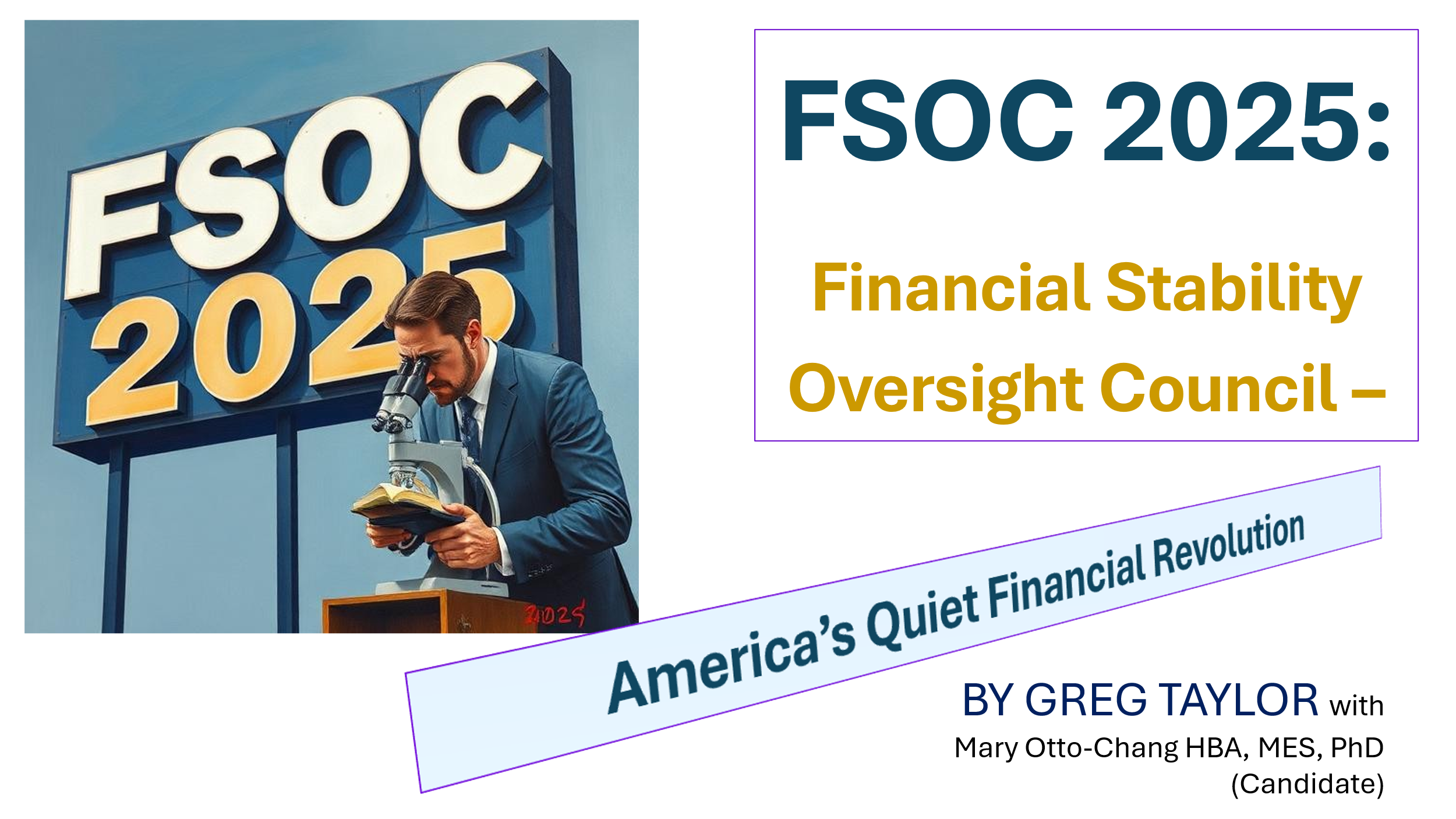
For fifteen years, America ran on a financial model that quietly funneled cheap money upward to global giants and elites while ordinary people faced rising costs, stagnant wages, and shrinking opportunity.
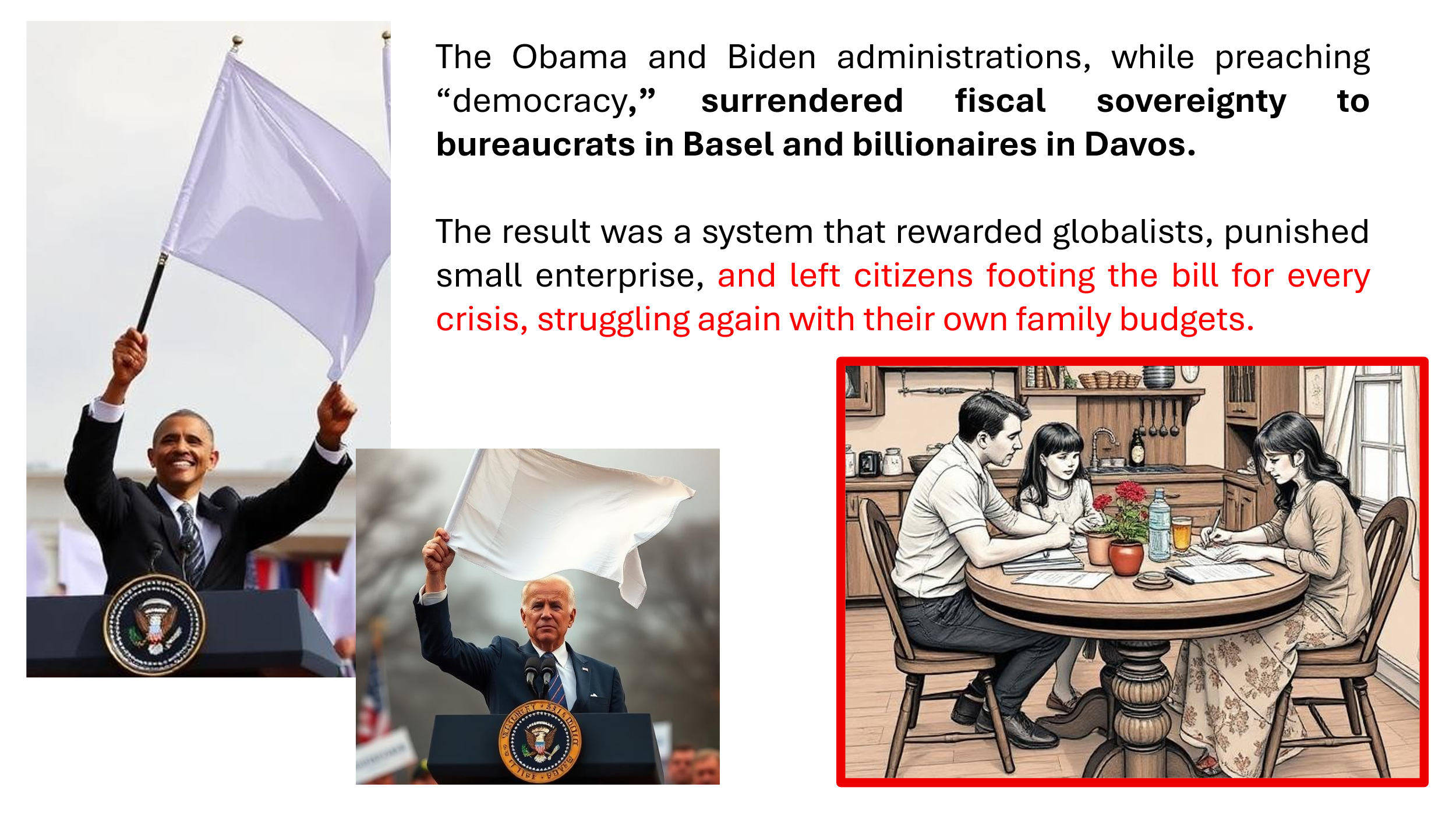
Pivot to Main Street
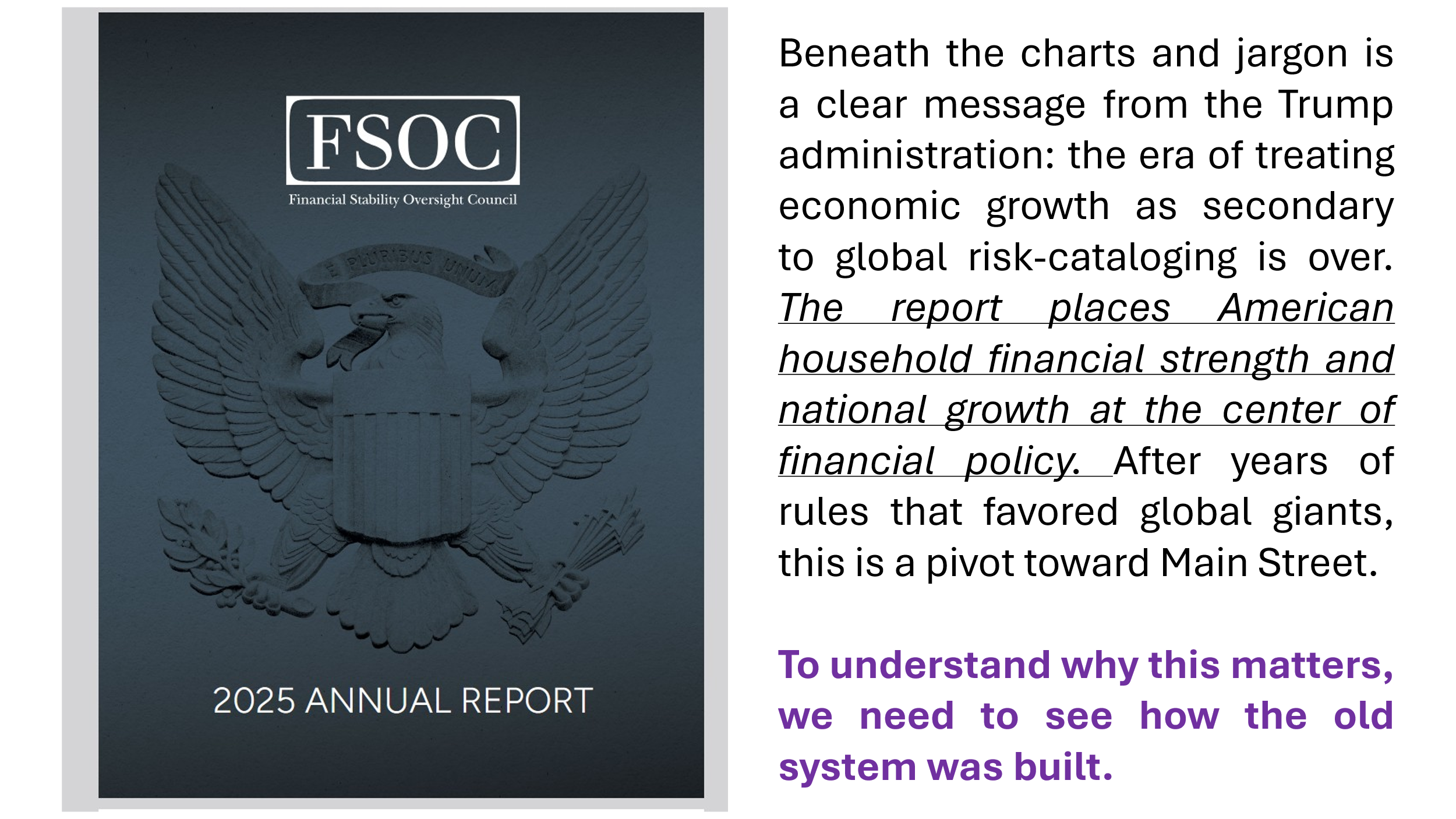
In December 2025, something shifted. The Financial Stability Oversight Council (FSOC), created after the 2008 crash, released a report that looks dry on the surface but signals a break from the old order.
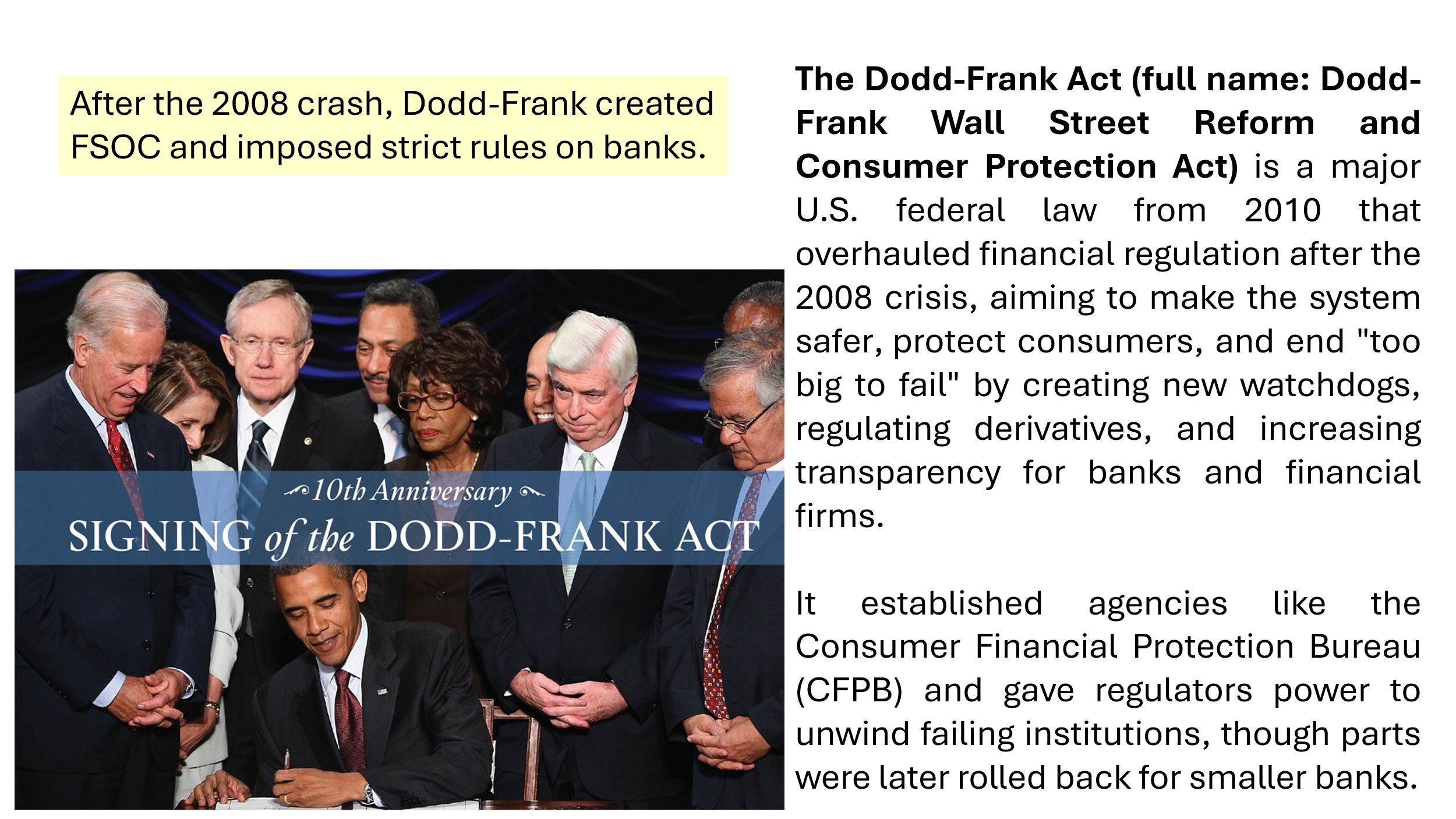
2008 Financial Crash & Basel III
Trying to impose some form of boundaries the Volcker Rule was then created. Ideally this would have worked, but it depended too much on honesty and transparency, things governments and banks are not so used to.
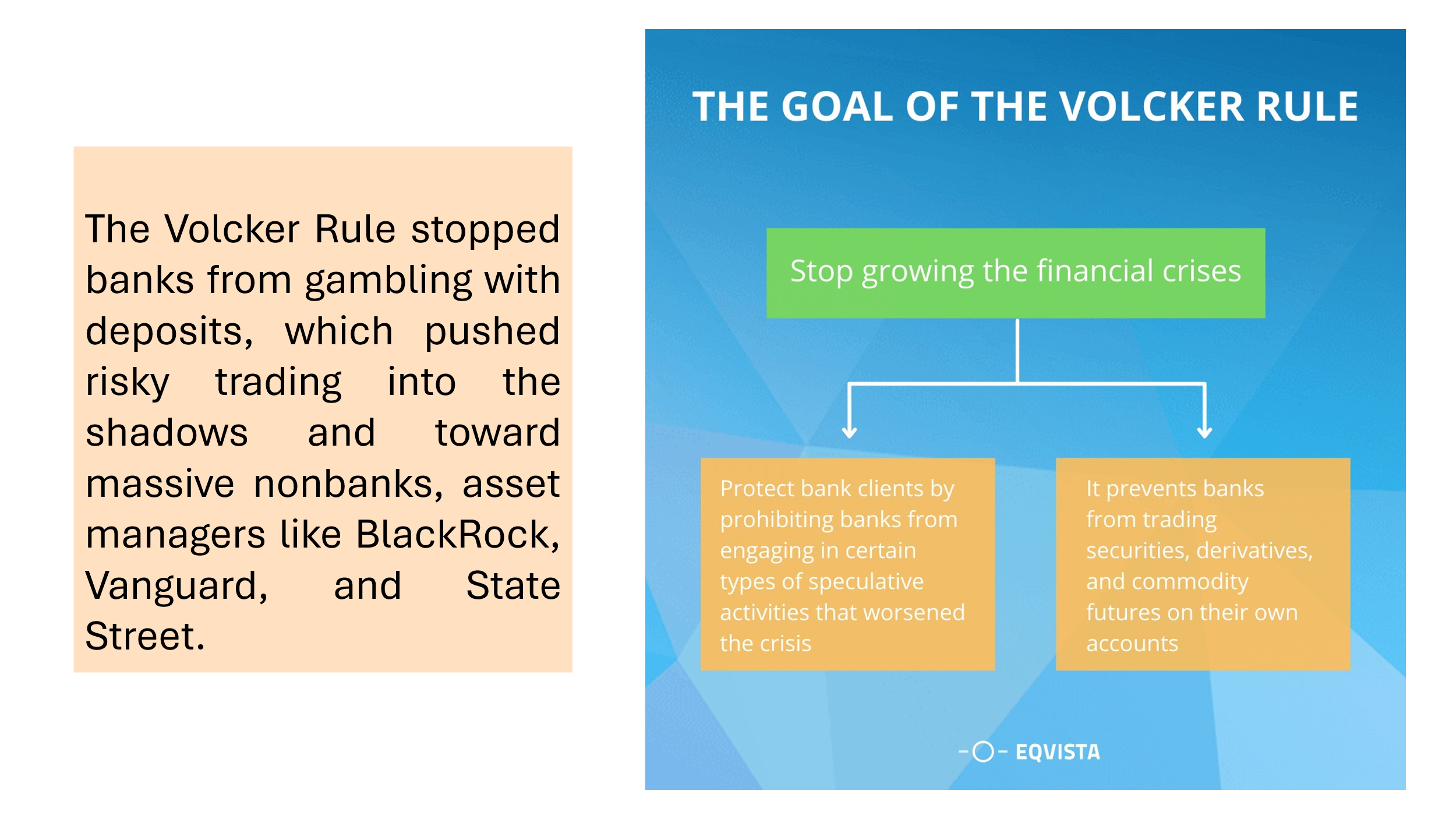
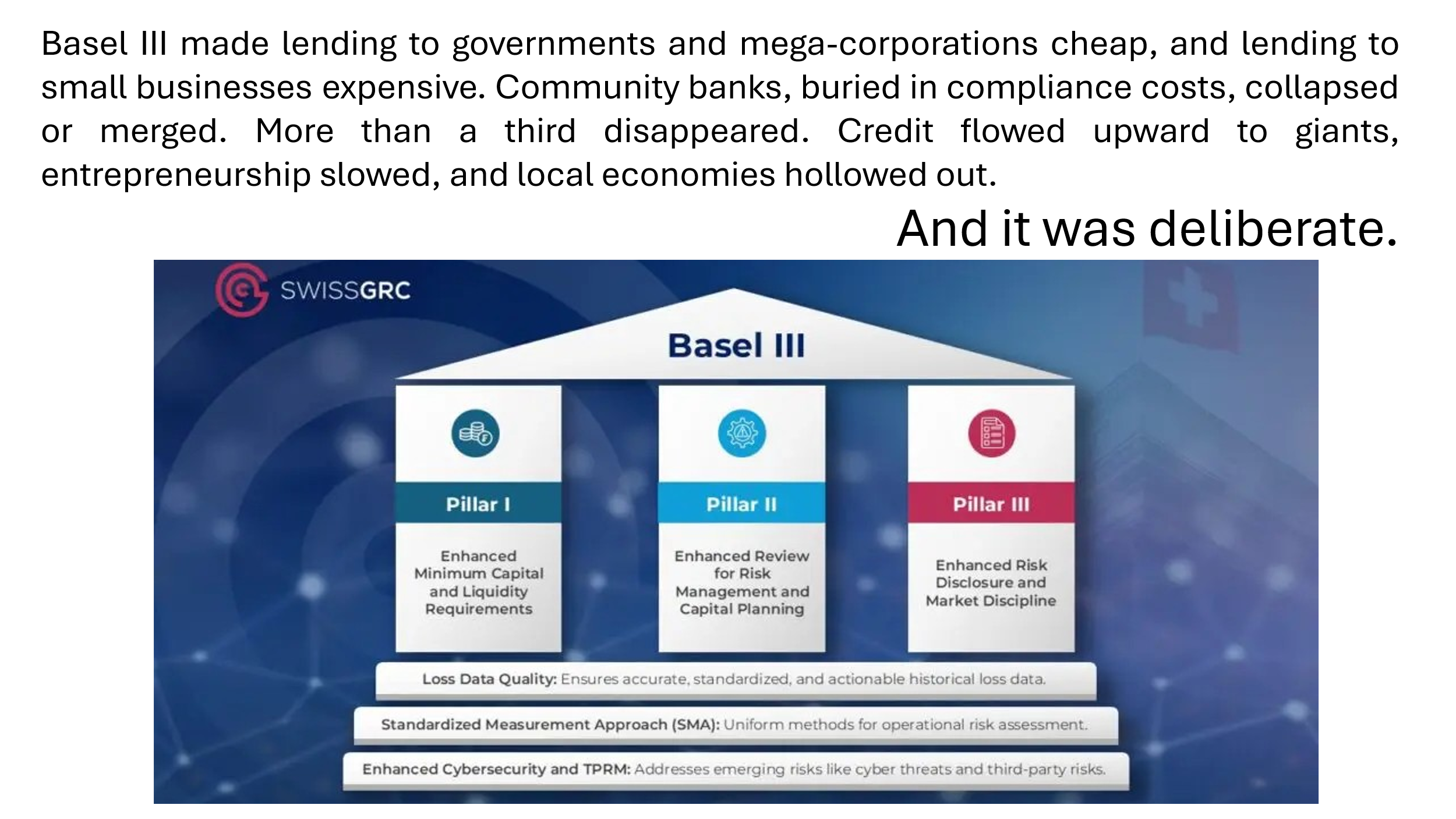
Power migrated from traditional banks to these nonbank giants. At the same time, the U.S. locked itself into Basel III, global rules written in Switzerland that dictated how much capital banks must hold against loans. It sounded technical, but it reshaped the entire credit system.
Jackson Hole Meeting
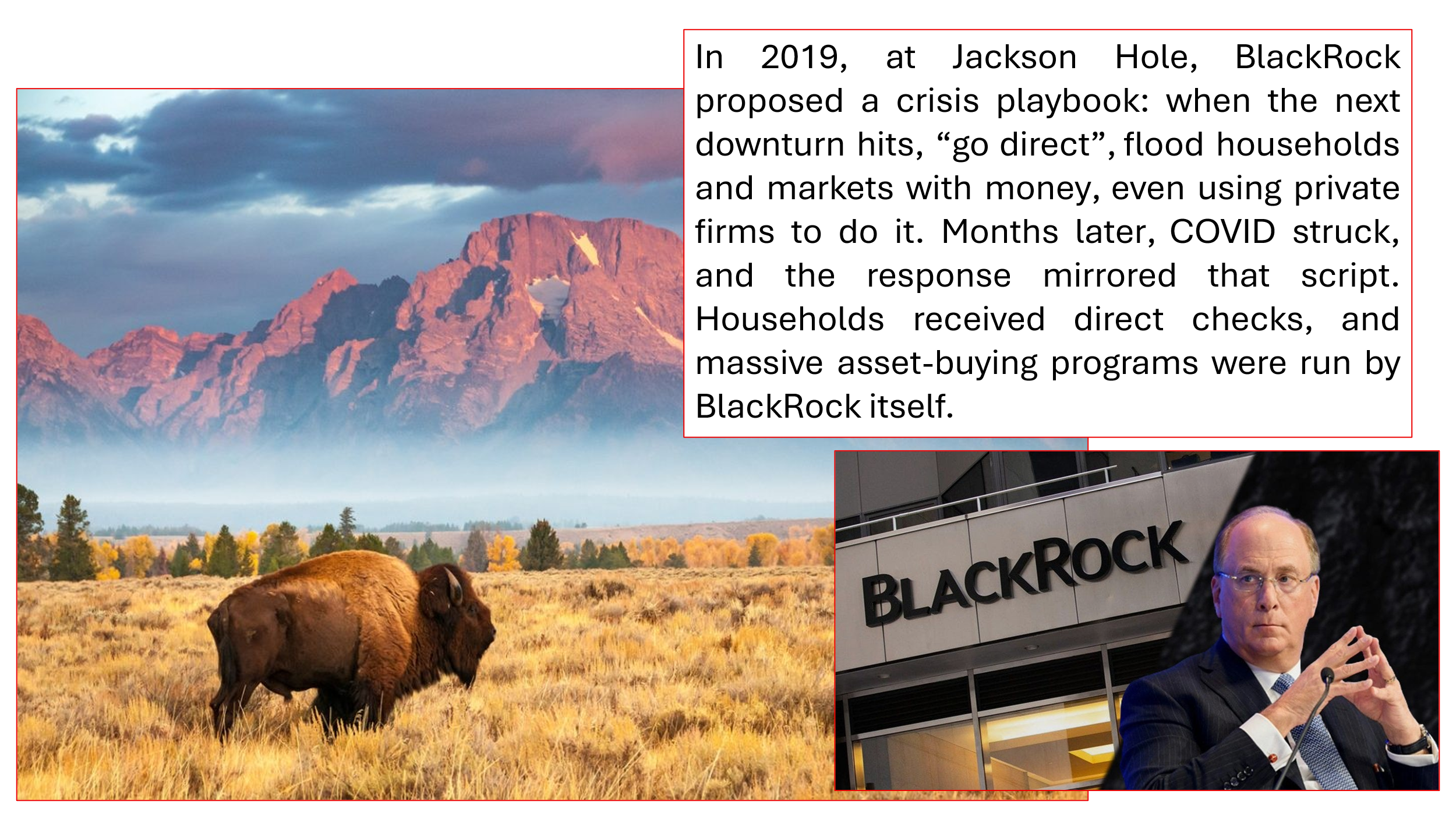
Asset prices exploded, the top one percent captured most of the gains, and taxpayers were left with the bill through inflation and record government debt. Governments borrowed trillions, and banks, nudged by Basel rules, loaded up on government bonds. Now those governments are trapped in debt, and the financial system holds the leash. Sovereignty was basically “mortgaged” to Davos.
A System Built for Giants
The architecture that emerged was built for giants. Basel rules pushed banks into government debt while nonbanks took the profitable risks. Crises enriched asset owners and loaded taxpayers with liabilities. A handful of firms grew enormous, shaping markets and policy through elite forums like Davos. Indebted governments had less freedom, and global norms from Basel, Brussels, and the WEF filled the vacuum. Workers faced higher costs, weaker wages, and a kind of managed stagnation dressed up as “degrowth.” Doesn’t that sound like the past five years to you?
Regaining Financial Sovereignty

In plain English, America is easing off the Basel straitjacket and reclaiming financial sovereignty. This is not isolationism; it is a recognition that a nation cannot thrive when its financial system is designed in Switzerland and enforced through elite networks that never face the consequences of their own decisions.
Why This Matters
For workers and small businesses, this shift means a financial system that is more willing to lend, more competitive, and less dominated by distant giants. It means a landscape where starting a business is easier, where credit is not rationed by global formulas, and where economic policy is shaped by national priorities rather than international clubs.
The old order will not give up quietly; the networks in Basel and Davos have spent fifteen years tightening their grip.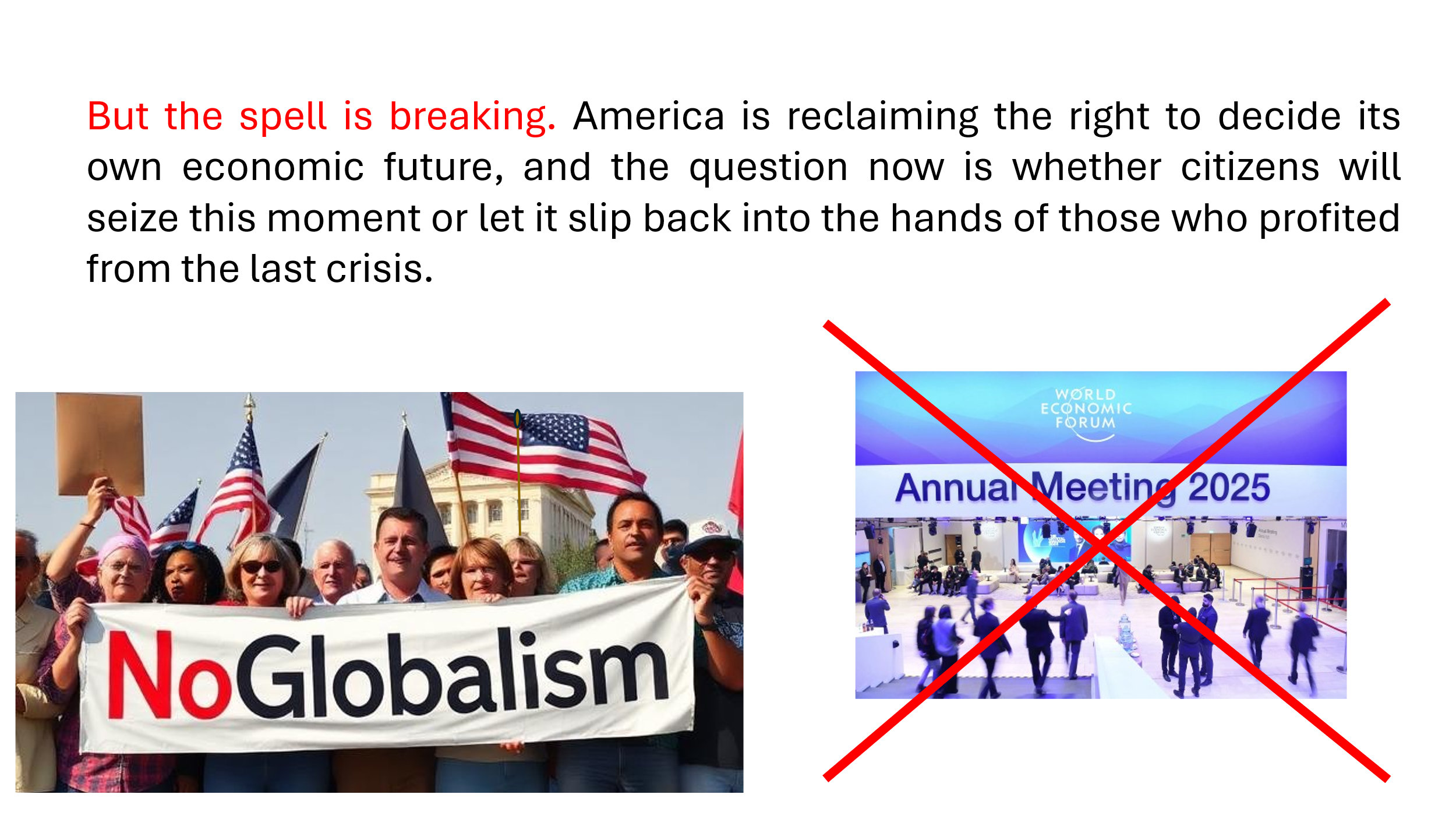
The next decade will decide who owns the wealth of this nation, the global giants who shaped the rules, or the Americans who live with their consequences.
Join republic.us today.
Sources:
https://home.treasury.gov/system/files/261/FSOC2025AnnualReport.pdf
https://lawreview.uchicago.edu/print-archive/regulation-threat-dodd-frank-and-nonbank-problem
https://en.wikipedia.org/wiki/Bank_for_International_Settlements
https://www.phenomenalworld.org/analysis/blackrock-asset-manager-capitalism/
https://www.visualcapitalist.com/mapped-government-debt-to-gdp-by-country-in-2025/
https://www.elliptic.co/blog/how-crypto-regulation-changed-in-2025