
This newsletter traces the road signs: realpolitik betrayals, World Trade Organization asymmetries, Belt and Road conquest, and accountability vacuums, as the pincer on Russia. The Rules Based International Order (RBIO) actually purposefully built modern China as a technocratic partner.
But has what they built gone rogue – off road from their designs? And can it still be reined?
Read the Full Article below.
Beware, sharp edges.
FULL ARTICLE
PREVIEW
In our last newsletter, we traced China’s quiet elevation within the rules-based international order, the strange courtship between Western technocrats and a one-party state now hailed as their model of stability. At first glance the alliance seems impossible: How could communist statism converge with Western capitalism? How could Beijing become the darling of elites who claim to defend liberal democracy?
The RBIO knew that technocracy is not communism’s enemy; it is its evolution, hubris upgraded with algorithms and global “rules.” Western elites never sought to replicate Maoist ideology wholesale, but they recognized in China’s one-party state a stepping stone to their harmonious future: centralized control for restraint, surveillance for stability, managed scarcity to avert unchecked abundance or popular sovereignty.
China’s rise was no organic miracle or hostile takeover, but a curated ascent: engineered, accelerated, and protected by the same transnational class that praises Beijing’s “efficiency.” A starving Maoist wasteland became the perfect canvas, transformed not by spontaneous genius but by Kissinger’s triangulation, American capital pipelines, and Brzezinski’s blueprints for managed society.
The courtship was geopolitical architecture: an eastern pincer complementing NATO’s western pressure on the Soviet Union in the 1970s, and now Russia. Today the pattern holds: the West bleeds in Ukraine while China gorges on discounted oil and positions itself as the RBIO’s indispensable stabilizer. A crystal ball to 2030 might show the RBIO West, with a compliant China, overcoming Russia and controlling its resources, the RBIO as one-world technocratic government under stakeholder capitalism. But at Davos 2026, Trump disturbed the plan, reclaiming sovereignty. Yet the RBIO will regroup, repurposing hubris to enforce its vision.
For decades the RBIO wore an American face: Washington as architect and enforcer, asymmetric power as Carney described at Davos. But post-2008, sovereignty drifted upward into a rootless transnational elite (Davos, WEF, global finance), where “stakeholder” multilateralism replaced U.S. primacy. This transfer of monetary, energy, military, and migration policy marked managed integration becoming managed decline, with China repositioned as pillar and eventual executor of the creed.
Read the full piece to see how Kissinger cracked the door, Brzezinski built the hallway, Deng turned the lab into the model… and why Davos 2026’s “rupture” confession signaled the mirror cracking.
FULL ARTICLE
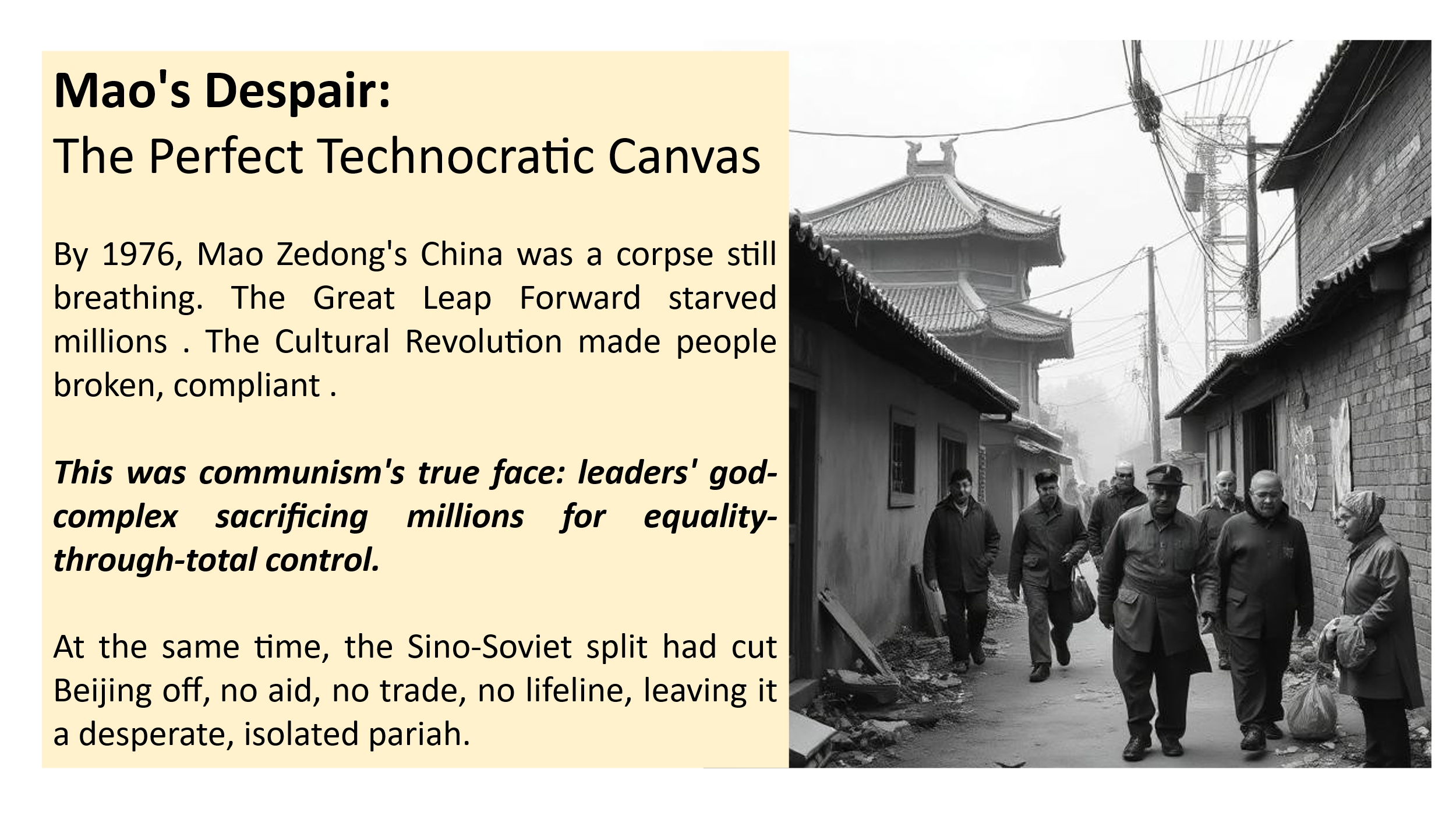
For Western elites, this wasn’t tragedy. It was opportunity. It was the blank slate: rock-bottom poverty, no entrenched private interests, a population too exhausted to resist. Controlled “reforms”, market crumbs under iron party rule, could be sold as miraculous salvation.
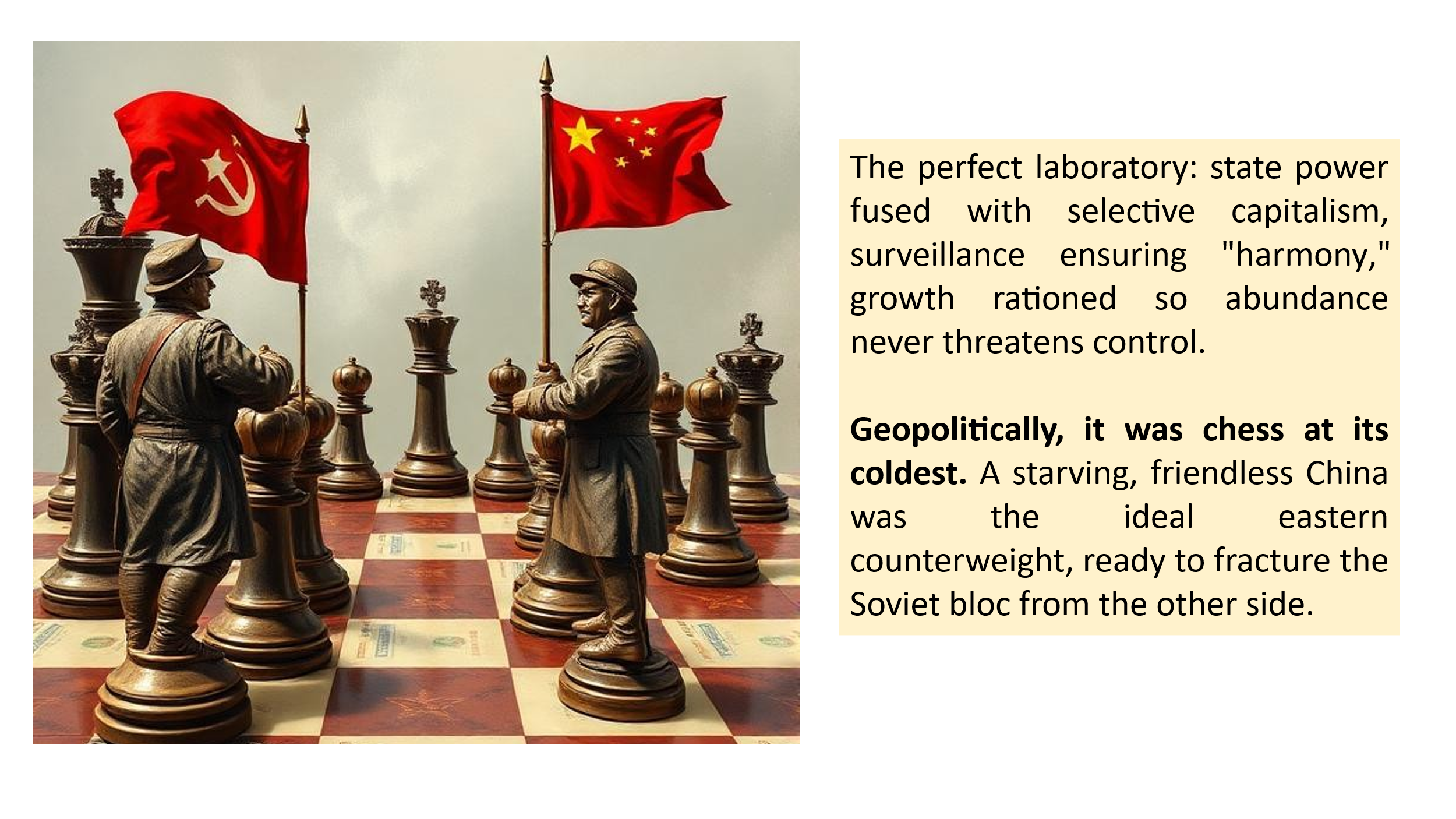
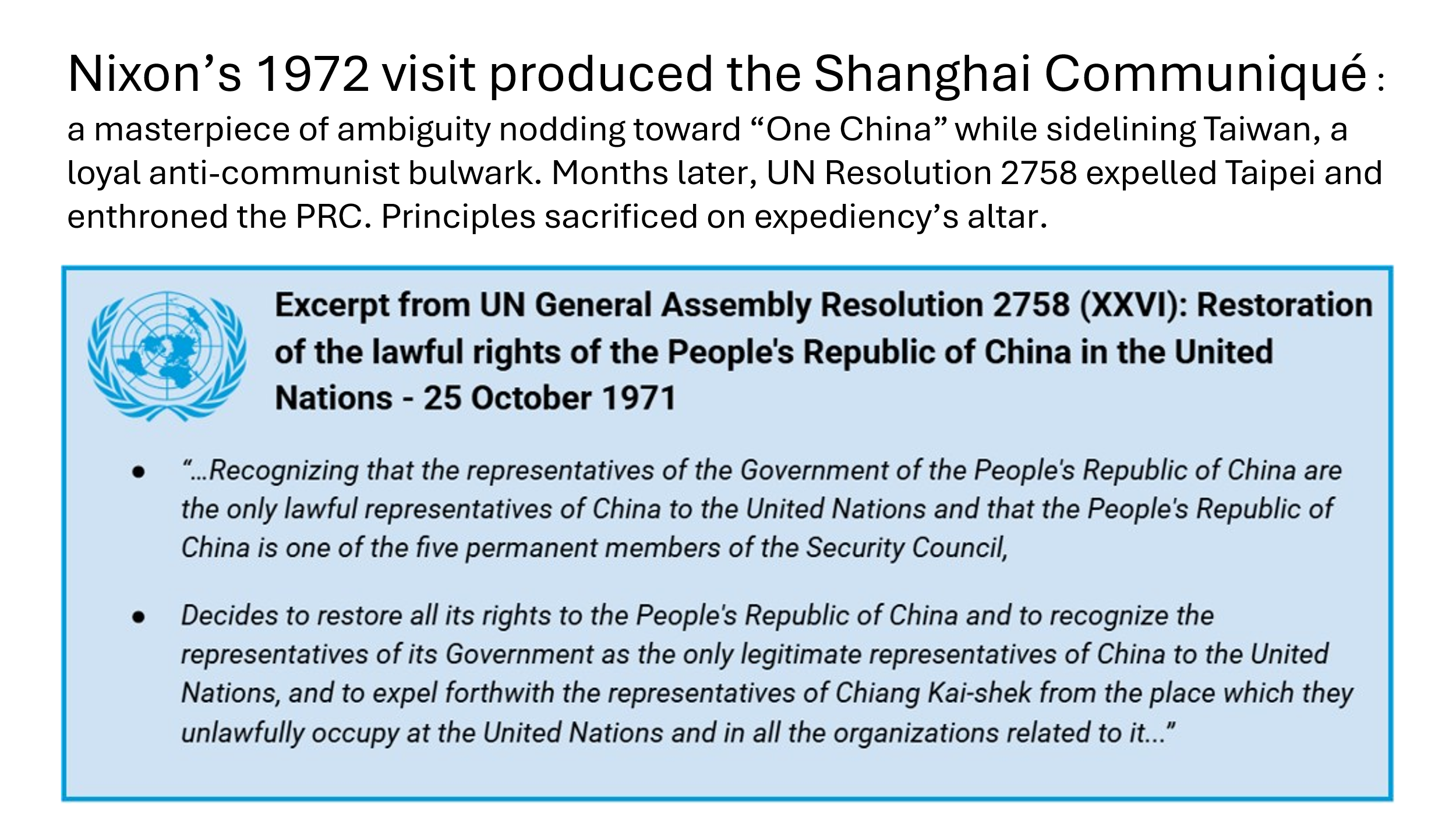
Kissinger’s Realpolitik
In the fog of 1971, Henry Kissinger slipped into Beijing like a thief in the night[1]. Sino-Soviet border clashes raged; Vietnam bled America dry. His mission wasn’t peace, it was fracture.
Kissinger’s mentors of American elite, moved swiftly. Chase Manhattan secured China’s first U.S. banking license[2], not a gamble, but a blueprint. A posse of American elite with the Trilateral Commission as co-architect, saw China as the canvas for a new managerial order: state control dressed as modernization, with elites arbitraging the transition.
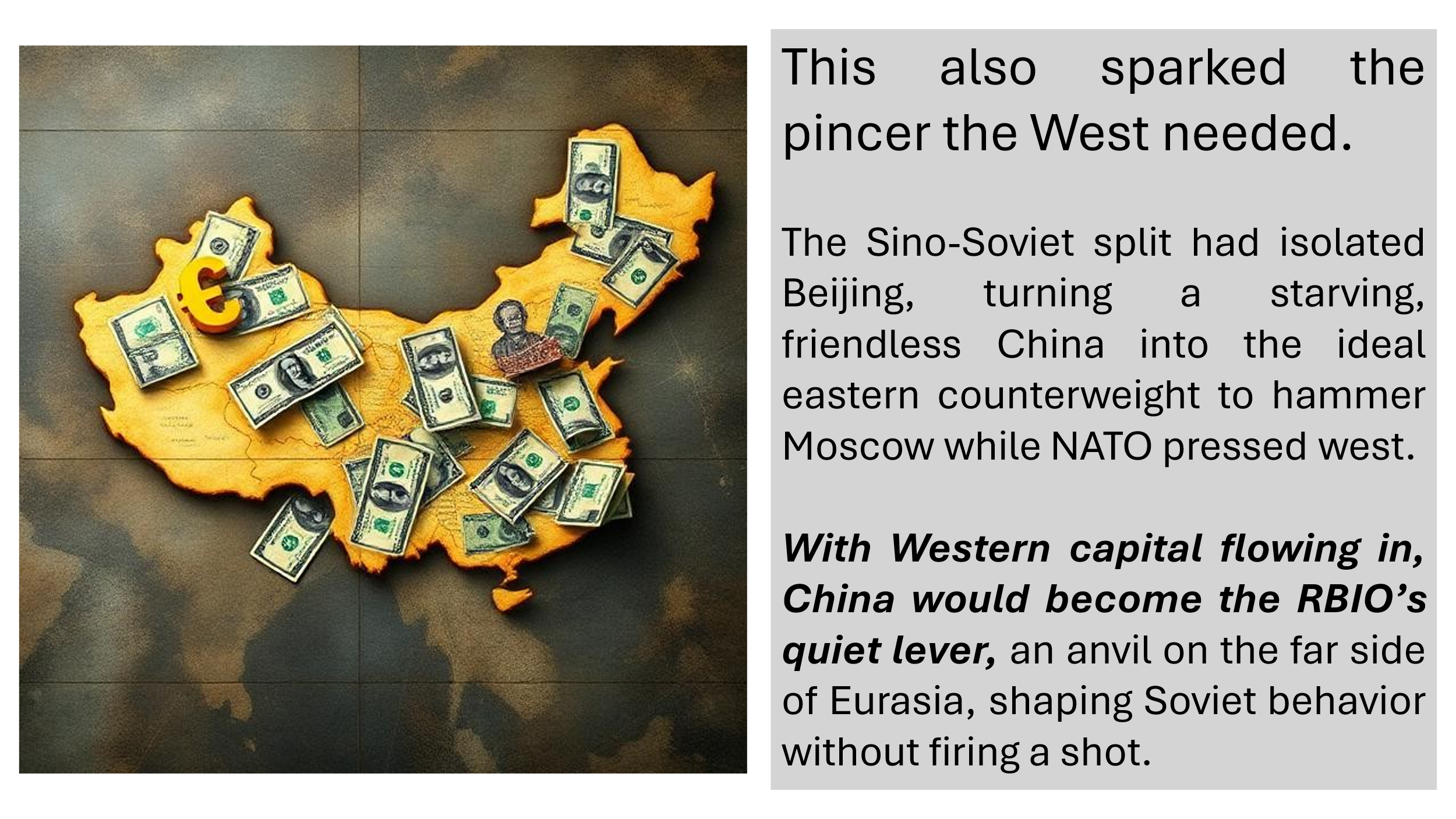
The architecture didn’t end with the Cold War. Russia remains the one power the RBIO could not fully absorb. Kissinger’s opening cracked the flank: jobs flowed east, communities hollowed, wages stagnated, elites arbitraged the chaos. The pincer that targeted the USSR now presses its successor from Ukraine.
Brzezinski’s genius was duality. In Between Two Ages (1970), he sketched the “technetronic era”: a society managed by elites through data, surveillance, psychological steering. Deng’s emerging “socialism with Chinese characteristics” mirrored it: state-owned enterprises guiding markets, financial repression channeling savings into exports, a party apparatus monitoring every citizen.
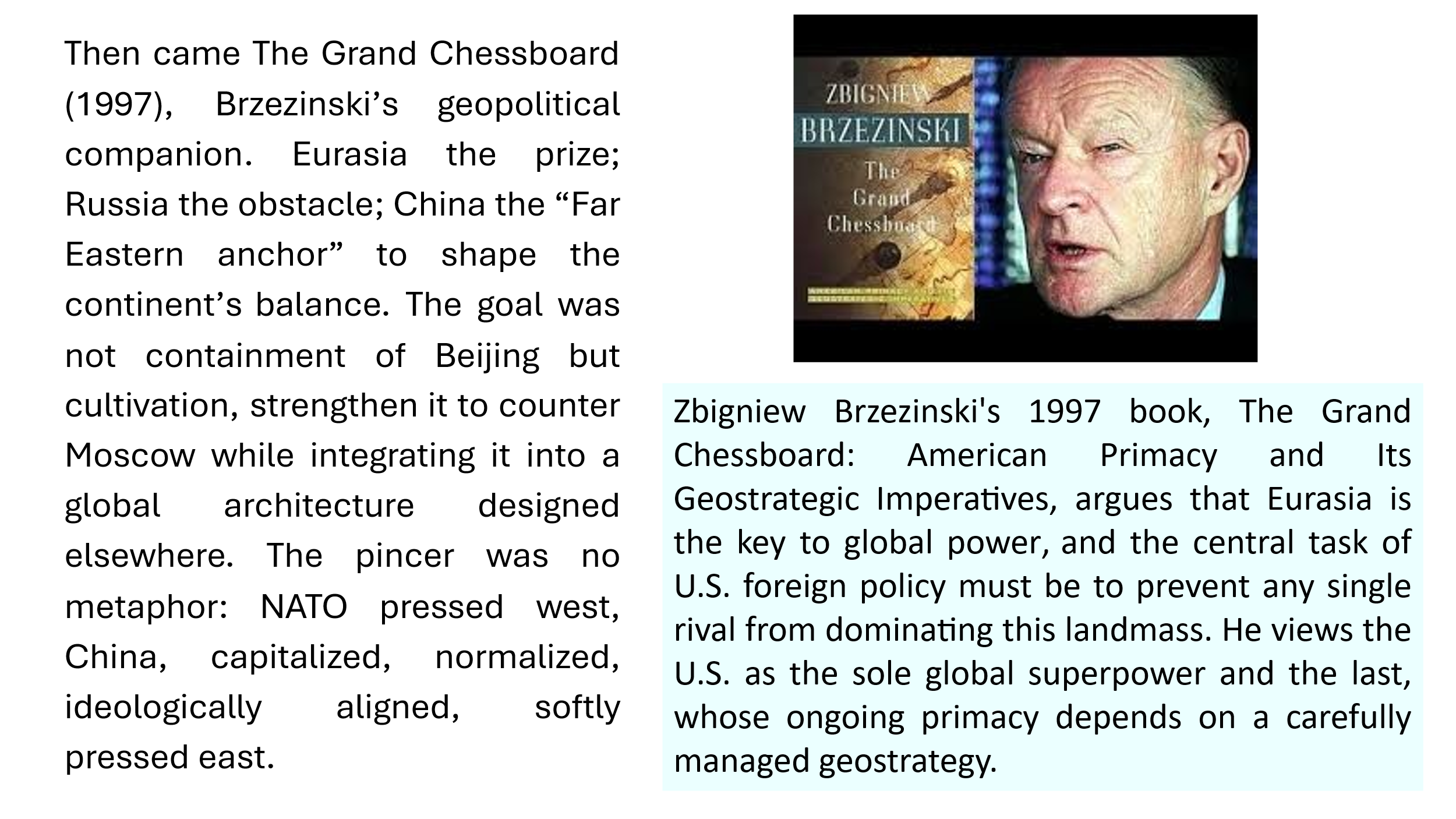
This parallel play defined the RBIO’s architecture. Technocracy crept inward as the pincer extended outward. The 1970s openings isolated Moscow; post–Cold War expansion reinforced the squeeze. Russia strained under sanctions and energy shocks while China surged into industrial dominance.
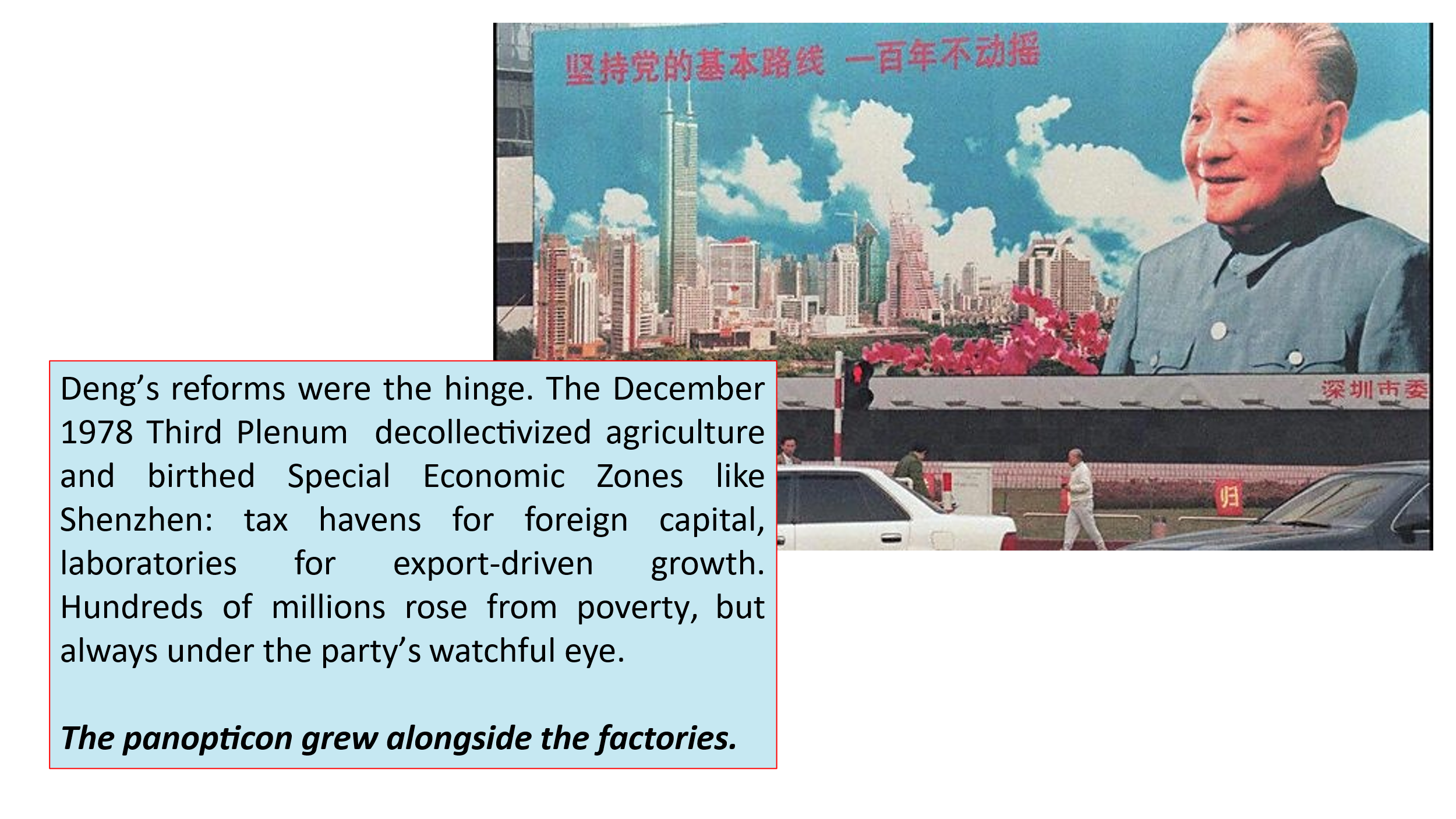
Brzezinski’s vision fused with American elite capital flows. The World Trade Organization (WTO) accession in 2001[3] locked in asymmetries: China kept subsidies and barriers; as Western markets opened fully. And manufacturing jobs evaporated; deficits ballooned; as rust-belt towns hollowed out.
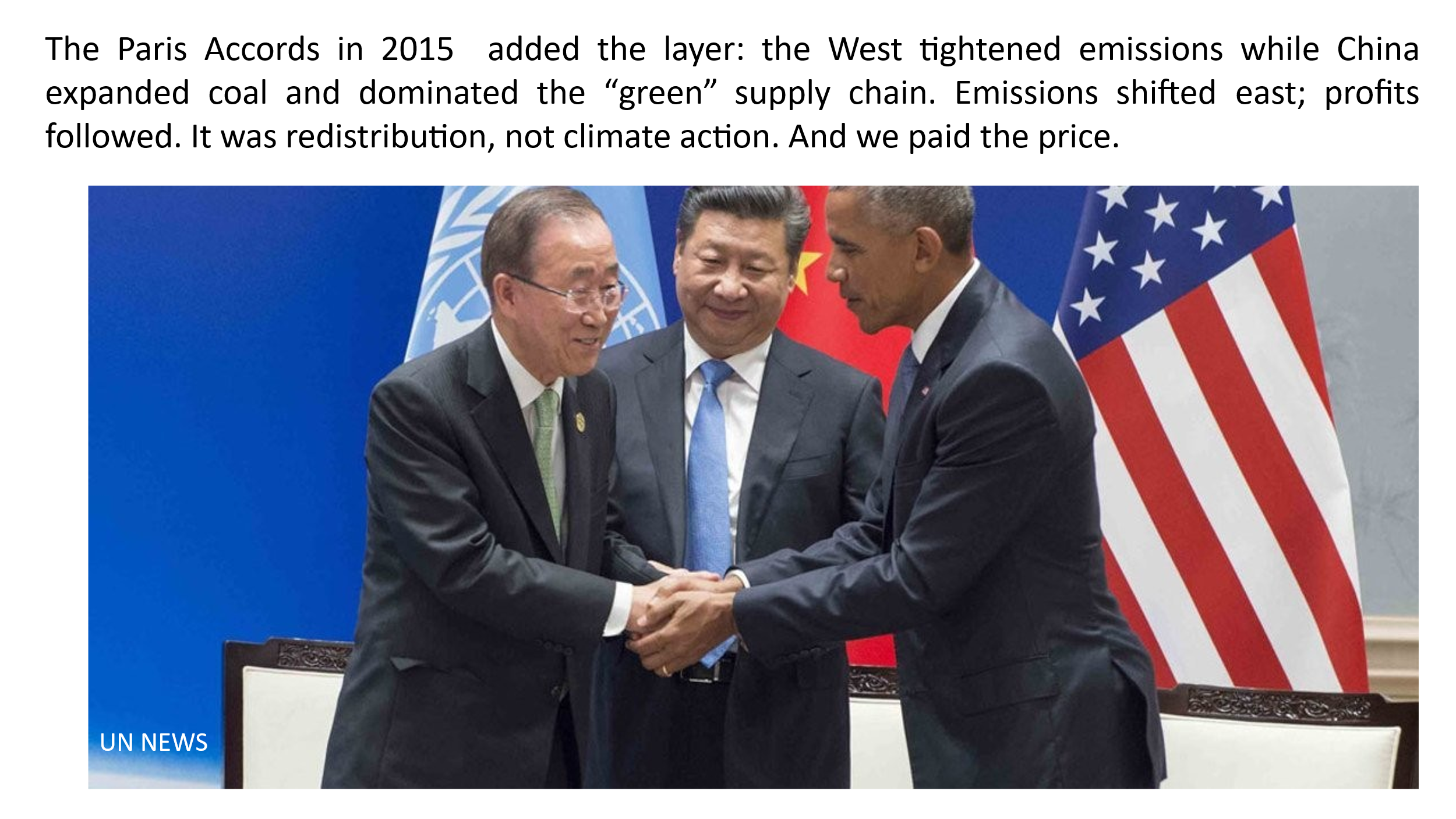
And the pincer never stopped. In Ukraine, Western resources flowed into a grinding proxy conflict while China quietly absorbed discounted Russian oil, expanded trade, and deepened influence. The architecture Brzezinski outlined decades earlier still echoed: the West bore the cost; China reaped the leverage.
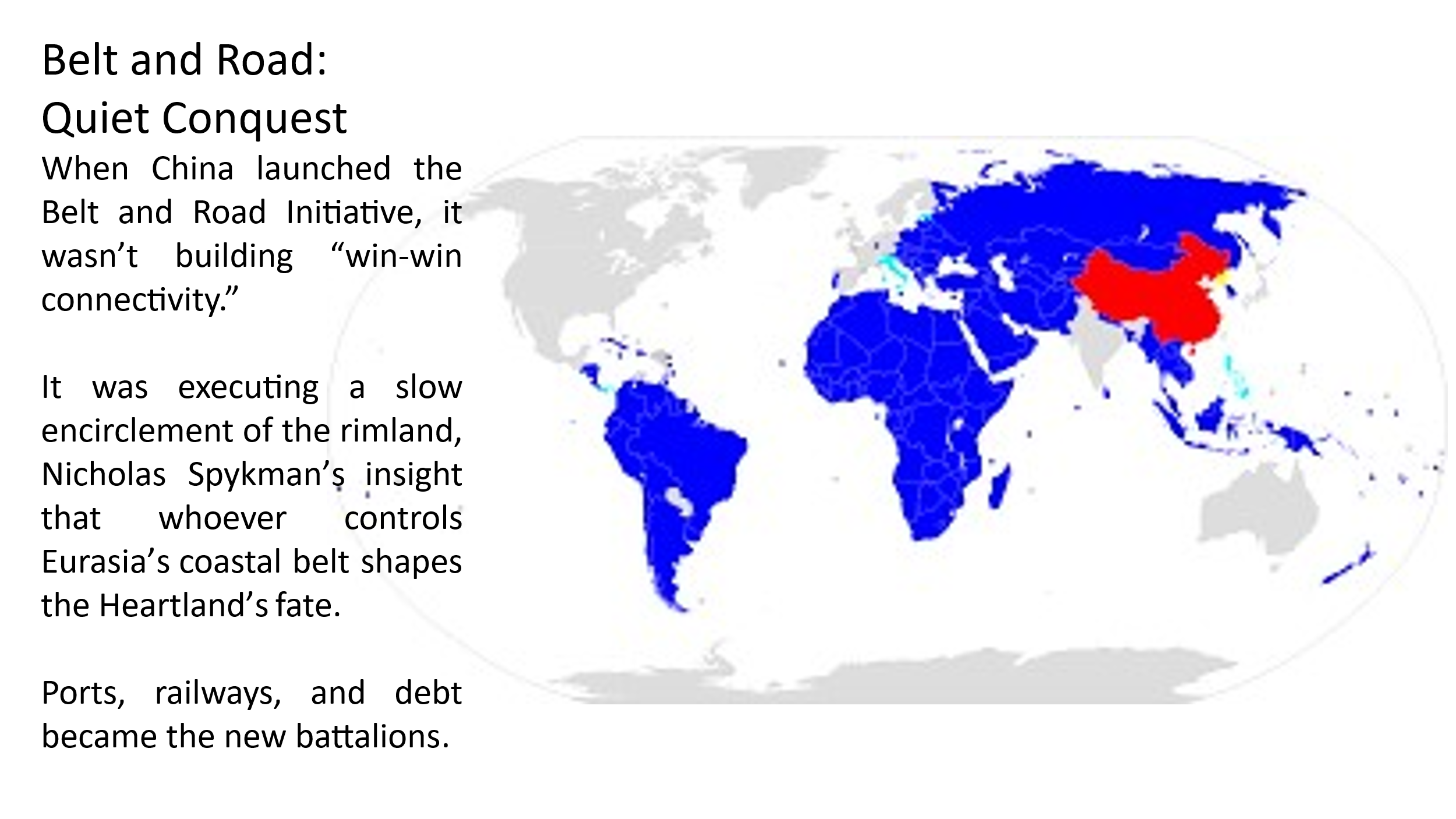
The footholds were unmistakable: China COSCO SHIPPING Corporation Limited (COSCO SHIPPING Group) seized 67% of Piraeus[4], turning Greece’s Mediterranean gateway into a Chinese logistics hub; stakes in Rotterdam and Antwerp extended Beijing’s reach into Europe’s arteries; control of Panama Canal terminals tightened its grip on a hemispheric chokepoint; oil fields in Venezuela collateralized as leverage. Through it all, the U.S. State Department slept.
Foreign-policy sovereignty drifted upward; economic sovereignty flowed outward; strategic leverage consolidated eastward. The RBIO’s “harmony” creed advanced abroad through quiet conquest, at home through managed decline.
The Accountability Vacuum
As China’s influence expanded, a strange asymmetry took shape inside Western institutions. Activities tied to Beijing, research, land acquisition, technology, infrastructure, were met with hesitation, fragmented oversight, or investigations drifting into ambiguity. U.S. foreign-policy sovereignty had begun drifting upward into the RBIO’s frameworks, where China was viewed as a foundational asset of global “harmony.”
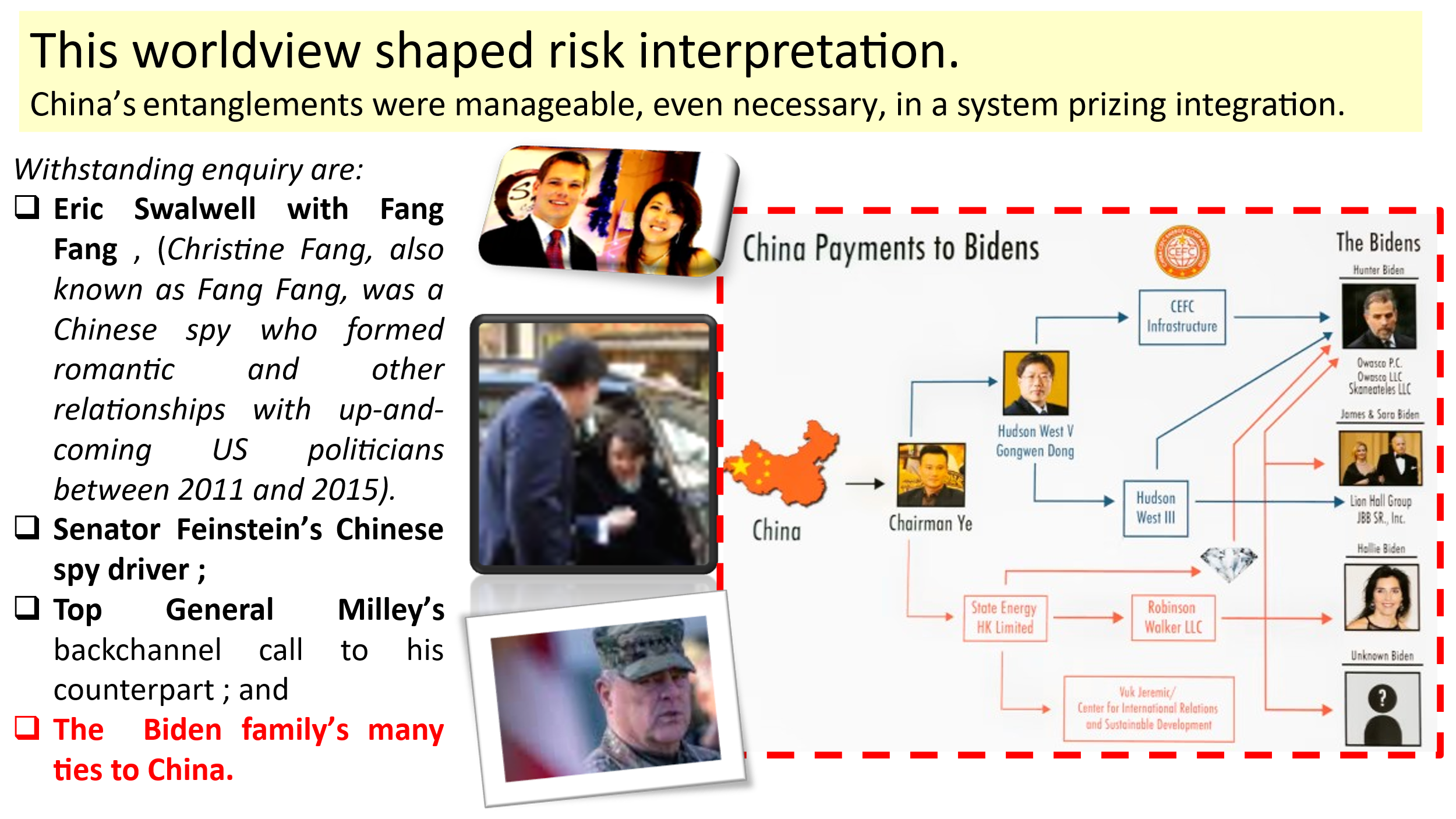
Russia’s entanglements with high-ranking American officials generally, were treated as destabilizing by default. One power handled with caution; the other with suspicion and force. The architecture revealed hierarchy.
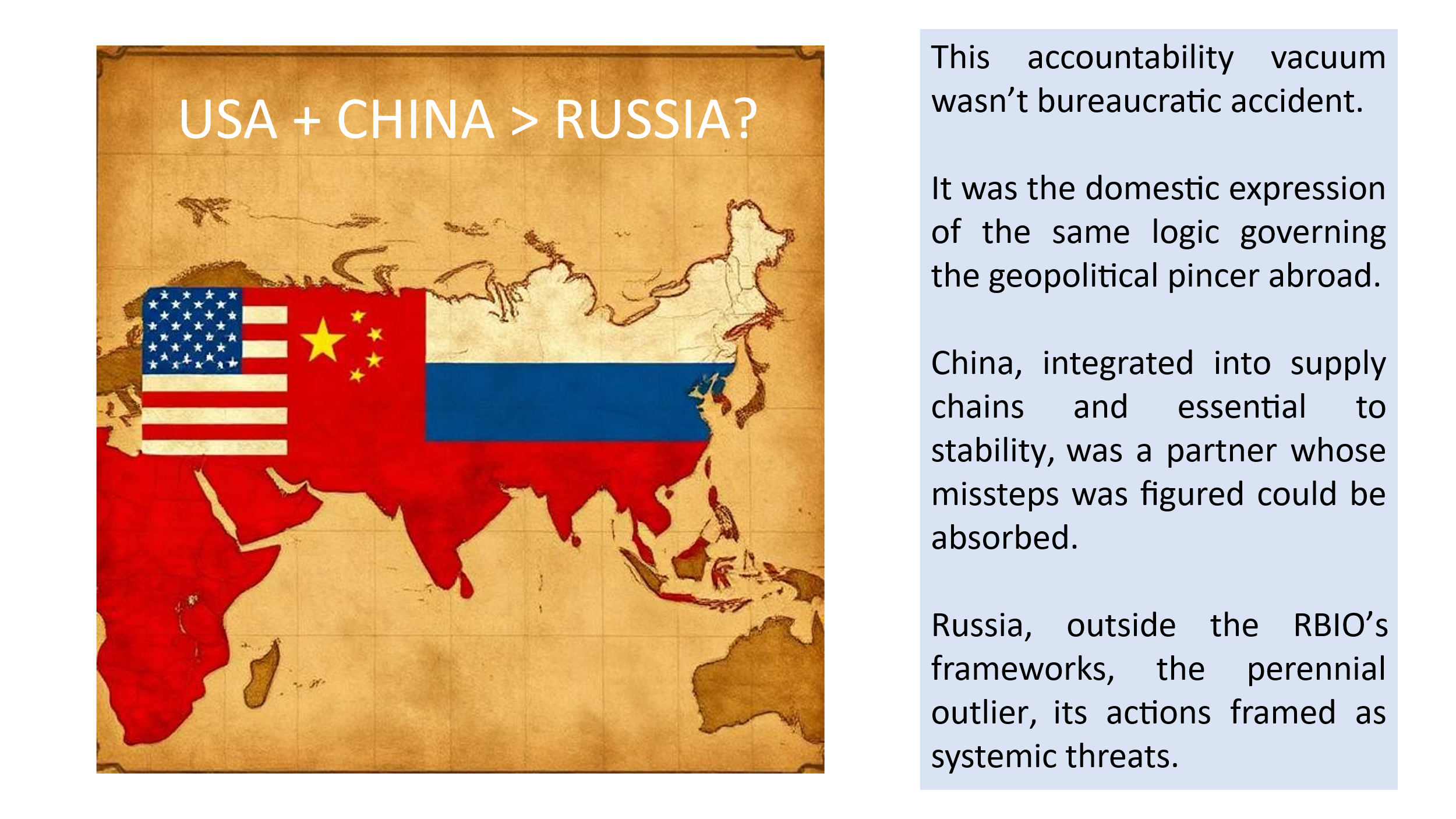
By the time Trump challenged the consensus, the institutional worldview was set. The RBIO’s logic, global stability through managed interdependence, had become the default operating system of U.S. foreign-policy organs.
China interpreted through partnership; Russia through disruption. The asymmetry was no glitch. It was the internal face of a geopolitical architecture decades in the making.
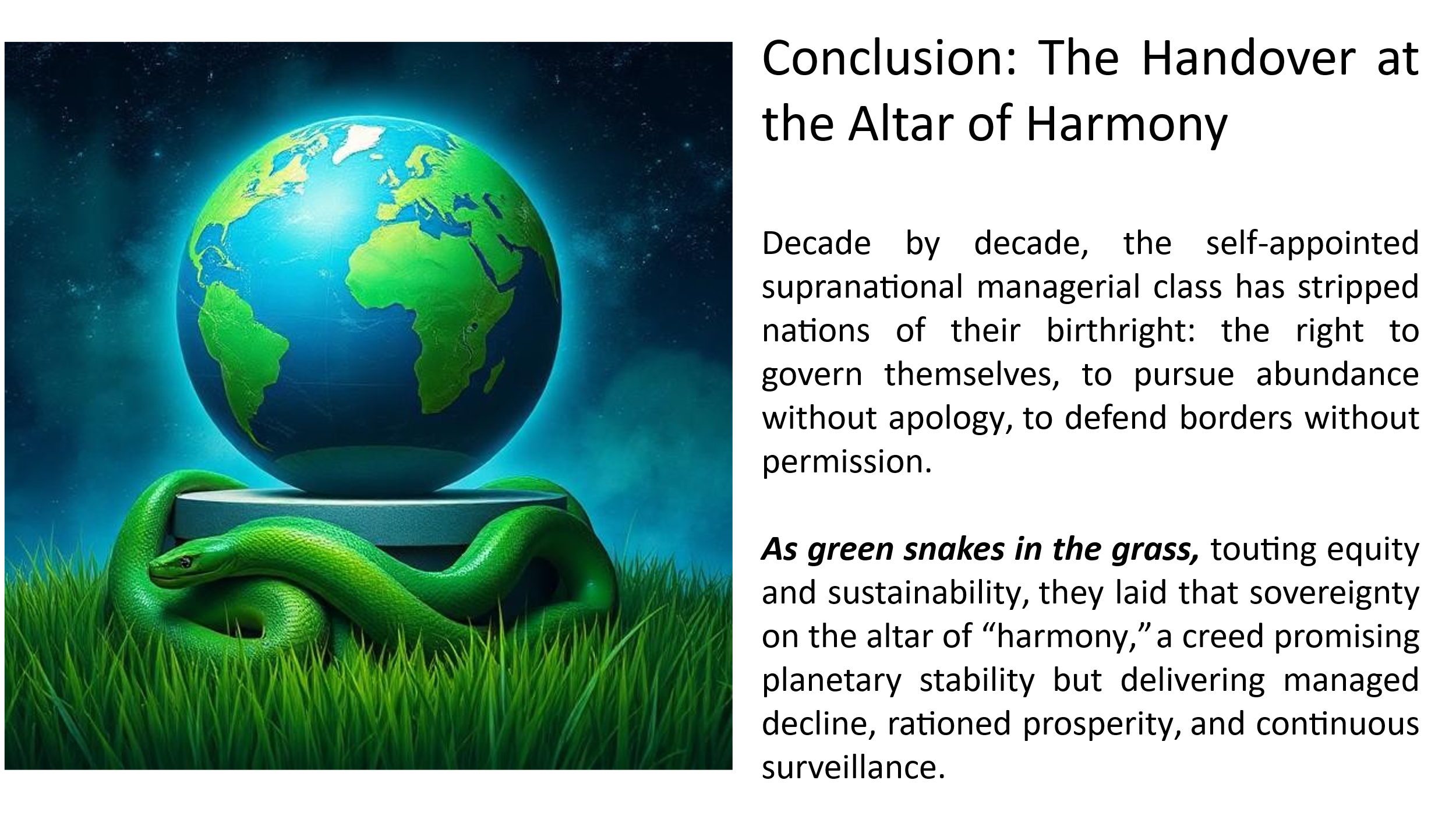
Kissinger cracked the door. Brzezinski built the hallway. Deng walked through and turned the laboratory into the model. The pincer tightened: pressure from the west, leverage from the east, and the ordinary citizen paid the bill, first through taxes for distant conflicts, then through hollowed industries, stagnant wages, and communities left to decay. Ukraine became the sacrificed pawn in a decades‑long parallel power play, sustained by institutions still loyal to the RBIO’s vision of order.
Yet in their paternalistic certainty, the architects never asked the most dangerous question: Who ultimately holds the power they redistributed?
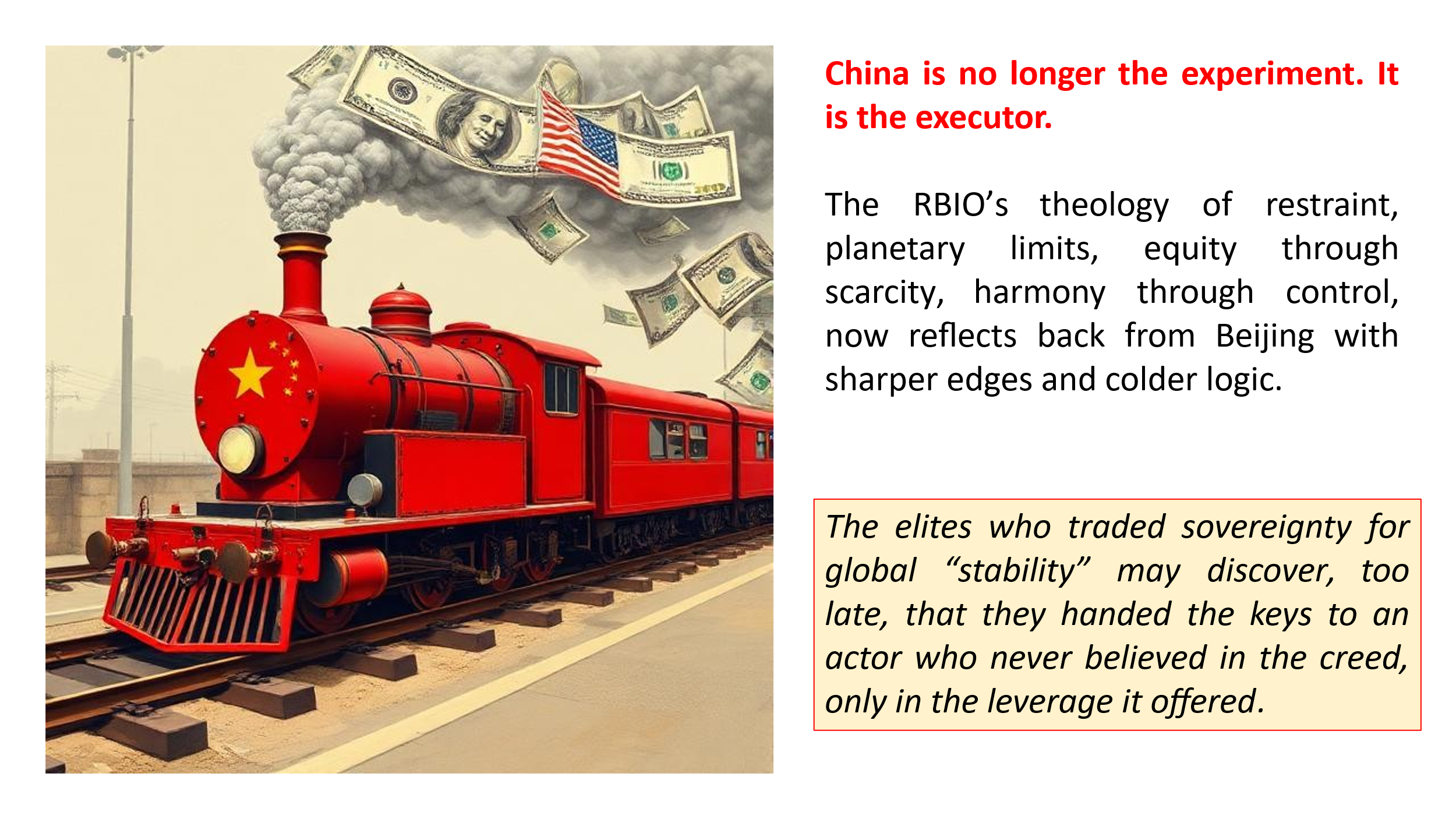
Davos 2026 laid the rupture bare, Canadian PM Mark Carney declaring the old bargain “no longer works,” the rules-based order in “rupture, not transition,” great powers wielding integration as coercion. The transnational class that diffused U.S. primacy eastward now faces the executor it cultivated; Beijing, wielding the managerial creed with colder precision.
JOIN US.
republic.us
USACitadel, a private, invitation-only platform created by Our Country Our Choice. It took time because we are fueled only by our members, not big donors or special interests. This platform is free and built to serve Americans, not the globalists.
Here, you’ll be able to connect in forums, organize with like-minded patriots, and help build a stronger America—county by county, state by state. Together, we will form a safety network, protect each other, and grow into a force of tens of millions strong.
You will likely have received your complementary invitation. Once inside, you can invite more like-minded patriots to join us. This is how we grow. This is how we unite. This is how we communicate and protect one another. Together, we will build a safety network in every county across America
We need your participation and your help to grow our membership into the tens of millions. Only then will we have a true force for the America First movement.
Endnotes:
Kissinger’s secret Beijing visit (July 9–11, 1971):
National Security Archive: https://nsarchive2.gwu.edu/NSAEBB/NSAEBB66/ ↑
Chase Manhattan’s first U.S. banking license in China (early 1970s):
Historical banking reference via Rockefeller Archive Center: https://rockarch.org/ (search “Chase Manhattan China”); secondary reporting: https://www.nytimes.com/1973/04/08/archives/chase-manhattan-opens-representative-office-in-peking.html (archived) ↑
WTO accession (December 11, 2001):
World Trade Organization official page: https://www.wto.org/english/thewto_e/countries_e/china_e.htm ↑
COSCO stake in Piraeus Port (67%):
COSCO Shipping and Piraeus Port Authority: https://www.coscoshipping.com/en/investor-relations/announcements/ (2021 completion); Piraeus Port: https://www.olp.gr/en/ ↑